AI-Driven Monitoring of freight wagons to optimize your processes and Infrastructure Management Problem description
Operators of rail infrastructure, ports, terminals and industrial facilities face the challenge of maintaining a reliable overview at all times of what is actually happening on their infrastructure. It is often unclear which trains are currently on which section of track, whether train lengths and speeds are being adhered to, or to what extent the route is being used by damaged wagons. This lack of transparency makes it difficult to ensure safe, efficient, and compliant operations.
In ports, terminals, and industrial facilities, there is a lack of end-to-end transparency regarding all incoming trains and their wagons. Inbound processing is often done manually, which is time-consuming and prone to errors. In particular, the identification of freight wagons and knowledge of the actual wagon sequences are often available only to a limited extent or with delays. This leads to increased search and shunting efforts, longer turnaround times, and higher process costs.
A lack of information about the condition of the wagon also leads to operational constraints. Without records the wagon condition, there is a risk during loading and unloading that damaged wagon will be loaded again, resulting in avoidable additional costs and delays. Furthermore, efficiently forming new train sets becomes more difficult when information about the technical condition of the wagon is not transparently available. In addition, it is difficult to determine liability.
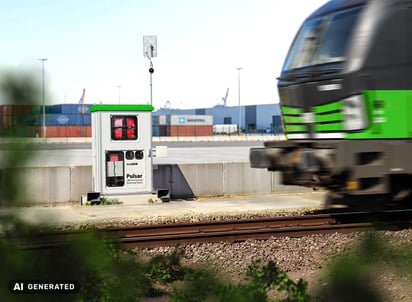
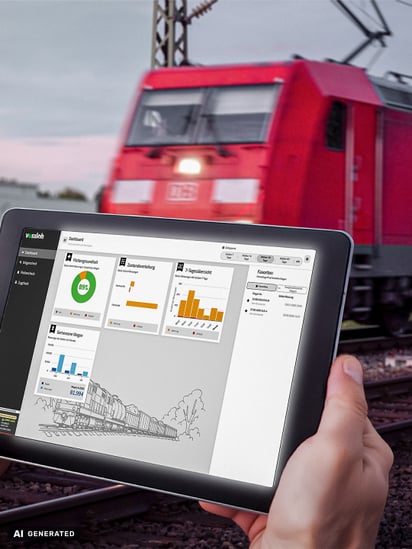
Because of the increased data transparency provided by the Pulsar, processes can be accelerated, defective wagons can be sorted out early on, and unjustified liability claims can be defended against.

.jpg?format=webp&quality=85&crop=1280,562,x0,y199&width=372)
.jpg?format=webp&quality=85&crop=1280,562,x0,y199&width=372)
.jpg?format=webp&quality=85&crop=1280,562,x0,y199&width=372)
.jpg?format=webp&quality=85&crop=1280,562,x0,y199&width=372)