Stabilizing Tracks. Pioneering Progress.

Stability under challenging conditions 

Stabilizing Tracks. Pioneering Progress.

Stability under challenging conditions 

Why does track stability matter?

Track stability directly influences the availability and reliability of the rail network.
Whenever infrastructure becomes unstable, intervention is necessary. Maintenance work, inspections or temporary restrictions reduce network capacity and increase operational complexity. Over time, these interventions lead to higher costs and greater resource consumption.
Improving track stability therefore means more than preventing technical issues. It helps to

  • ensure reliable operations
  • maintain network availability
  • support efficient rail transport

Download the whitepaper!

“The maintenance windows for tracks are getting shorter worldwide, while extreme weather conditions and big temperature shifts are leading to more stress on rails and tracks. That's exactly why modern fastening systems need to do way more today than they did just a few years ago.”
– Tim Olbrich, Product Management 

Track stability starts with the right connection

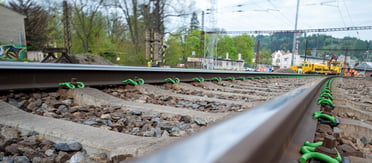
Track stability is determined by the interaction of multiple elements within the track system. One of the key factors is how forces are transferred between rail, fastening system and substructure. 

Our M-Generation tension clamps were developed to improve this interaction.  


Download the whitepaper!

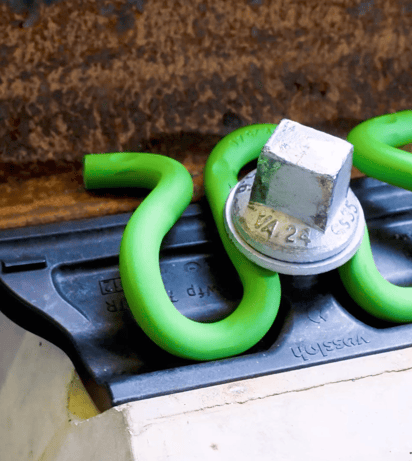
M-shaped spring arms

Outwardly bent spring arms increase the contact area between tension clamp and rail, reducing contact stress and improving force distribution.

Higher stability

Optimized geometry provides significantly higher torsional resistance to improve frame stiffness.

Proven performance

Successful laboratory and field tests show higher torsional resistance stabilizing the rail – even at high temperatures and heavy traffic loads.

Easy replacement

Fully compatible with existing fastening systems. Tension clamps can simply be replaced without additional sleeper processing.

Efficient installation

Faster installation reduces track blocking times and allows lines to return to operation sooner.

Greater track stability has a direct impact on railway operations. Stability means availability

When rails remain securely positioned, the risk of track distortion decreases and trains can operate more smoothly. Maintenance interventions become less frequent, closures can be minimized and the overall availability of the network increases. 

In this way, improved fastening technology contributes not only to safer infrastructure, but also to more reliable and efficient rail transport. 

Stability that prevents tomorrow’s failures.

Download the whitepaper!

Discover the next generation of our tension clamps

Fill in the form to access and download our exclusive whitepaper to discover how stability, robustness, and sustainability are shaping the next generation of fastening systems.
For even deeper insights, you can also register for our upcoming webinar, where our experts will expand on key topics, share practical applications, and answer your questions live. 

Download the whitepaper!

Less downtime. Less CO₂. Less complexity.

Ready to make that happen?

BenefitsSolutions that shape railway infrastructure worldwide

Innovation rarely comes out of nowhere. It rather builds on experience. For over a century, we have been contributing to the development of modern rail fastening systems. From early fastening systems to the invention of the M-Generation tension clamp, our solutions continue to shape railway infrastructure worldwide to this day. 

This know-how forms the basis for identifying future requirements at an early stage and translating them into new system solutions. In order to operate tracks in a stable and reliable manner in the long term, these challenges must be approached holistically.

Download the whitepaper!